Monday, 22 February 2016

Kingdom of the Spiders (1977)


With a creepy-crawly themed column to write for The Engineer, but brain drained of power, watching a trashy bug movie too easily became justified as 'research'.

Spiders stars Bill Shatner, and with higher than expected reviews on the internet - not great, you understand,  but not as abysmal as the same year's similarly titled Empire of the Ants - a viewing turned out to be worth the time. It's a Tremors-esque tale of an isolated town falling prey to unnatural nature, with Jaws overtones thrown in for good measure (complete with 'we can't close down the county fair!' mayor). Sure, watched through modern eyes there is not a single effective scare to be found in the thing, but there are other pleasures.


Kingdom of the Shatners

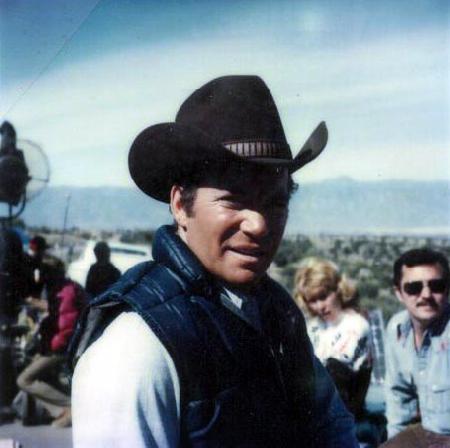
Bill is fun to watch in just about anything, but it is particularly pleasing to see him decked out in cowboy hat and jeans as lead Rack Hansen (Rack?). Shatner chugs beer, rides horses and sleazes onto his dead brother's wife before spider proceedings even get started, sporting Gillet and lab coat with equal aplomb.

There's also a nice bit of writing around his relationship with Tiffany Bolling's Diane Ashley - his dimwitted efforts at midwestern seduction see her shoot him down again and again, and while this sadly can't last, it helps make Ashley likeable. It helps Shatner too - his desperation is a hoot, even abandoning his own car at one point (along with his dignity) in pursuit of blonde satisfaction.


Kingdom of the Screamers

There's a scene where Bolling is showering and dressing in her motel room; the camera pans away to reveal an arachnid creeping into the drawer of her dressing table. The seasoned viewer expects her to discover the spider, scream, and run for Bill's arms. Instead she shows only detached curiosity, even affection for the twitching, furry, eight legged freak, handling it with calm interest. It is a surprising moment and elevates proceedings.

Besides, the movie provides plenty of other howls to make up for it - probably some of the best is achieved by the crop dusting flyer, who must at least have a claim to the most prolonged screaming sequence in cinema history. The camera just sits there and watches him let rip, as crafty spiders send him spinning into a fatal prang.

The Colby family have one shitty week in this movie

Kingdom of the Stampers

Things only really crumble in the final third, as Shatner and co hole up in a cabin, discover various parties cocooned in silk, and plug holes by which their crawling tormentors come tumbling in. The energy is rather sucked out of proceedings the longer we're in there, and the ridiculousness becomes harder to live with: the spiders cut the phones; a spider is crazy glued to Shatner's cheek. Then the whole narrative descends into a lot of stamping, which is farcical at first, then (worse) a little dull.

Kingdom of the seventies

Apparently there are plans for a remake afoot. Thingaboutchickens will not be seeking it out. Instead the plan is to source more of Shatner's 70s TV movie output, and see what cobwebbed treasures might be found. Stay tuned.


Tuesday, 29 December 2015

Ghost in the Shell


A reader recently compared Steeple to 1995's Ghost in the Shell, Mamuro Oshii's hugely popular manga adaptation - and this prompted an insomniac 1am viewing, with the lights off and earphones in. 

That's a good way to experience the movie - submerged, isolated, like Major Motoko Kusanagi on one of her diving expeditions, waiting to float to the surface and be reborn. The small hours amplify the movie's prolonged silences, those dialogue free stretches which help Ghost ascend to something like great cinema - witness Batou and Kusanagi's pursuit of a suspect through a derelict district, the only soundtrack footsteps in puddles, the hum of the city, a vast aircraft hovering over abandoned towers.

The dialogue in Kazunori Ito's screenplay is a mix of impenetrable clunky info-dumps interspersed with snappy noir-tone lines, but the weaknesses Ito asks viewers to swallow (which must, after all, be taken with a pinch of translation salt) never detract from the script's ambition, and its skilful interplay of action and ideas. 

Puppet Master:
Memory cannot be defined, yet it defines mankind

Oshii and Ito's exciting, gun-toting future espionage adventure easily accommodates a thoughtful exploration of identity in a world where memories are manipulated, faked and used as weapons; where consciousness is a ghost haunting a network; where bodies are more than ever disconnected shells, and gender uncertain.

That is quite a trick, and its played out in a beautifully realised world sprinkled with elements of military scifi (got to love that spider tank), intricately detailed city scapes (of brilliant daylight as well as Blade Runner gloom), and a pretty good sense of humour.


Most striking of all are the wonderful score by Kenji Kawai, which grips the viewer's heart from the opening title sequence, and Oshii's astonishing direction. One particular long, closing shot in the final scene is like some unnerving, trickster Van Eyk portrait, slowly revealing itself - one of several moments of truly striking, unique effect. 

Ghost in the Shell 2: Innocence is written by Oshii alone, without Ito. Interesting. It will have to be viewed soon, on some other lonely, late night, laptop screening. Sometimes it's the only way to go.


Thursday, 26 November 2015

Blackstar: Bowie's Back


Have to jot something down about David Bowie's ten minute treat, Blackstar. 

H insisted I watch the music video the other day, and I resisted at first, having grown weary of David's recent output. Songs like Where are we now and the Stars are out tonight were a bit...easy, with nothing like the freakery or inventiveness of what defines proper Bowie. No album of his since Outside, in fact, had enticed.

So I'm surprised to find myself singing Blackstar to myself in the shower, on the street, even at work. There's something about it. The video is especially delightful, made by someone who knows how to draw Bowie's freak out from his fashionista's shadow. A good thing too. I'd missed freaky Bowie.

The opening four minutes of the track brings to mind Radiohead: ominous bass, lamenting vocal, twitchy electronic drums. That might put me off in other circumstances - but David's wearing a button-eyed blindfold! Plus, he's giving his all to some beckoning, finger-waggling, shivery choreography of which a Bausch or a Schector would be proud.

But what makes the video really loveable is that the Director, Johan Renck, so loves Bowie's face - not just the eyes, but the whole wonderful, ageing structure, the great arch that spreads from his eagle nose to his mouth. It's all examined in fine detail, and new things are discovered. I'm not sure anyone else has so delighted in Bowie's teeth before. Who knew those ivories could clench into that skull-like, nauseous arrangement? Check him out around 1 minute 20 - it's a treat.

Even better, after four minutes Bowie gets to take off the blindfold and pull on his funky boots, launching into the best song I've heard from him in a decade. While he's at it he struts and poses and wags his finger, and makes you remember the spindly force he can generate with that physique. By the time he grasped his lapels and sang: 'I'm the great I am' I was giddy with joy.

A few people have had criticised the video - I read some snooty comments about the scarecrows - and I have to admit I was hoping to see more of the diamond-skulled spaceman we glimpse tumbling into a black star.

Still, the main theme - the girl with the tail, the dancers, the solitary candle - is a feast for me. I have seen an awful lot of modern dance through H's work, and it's rare that I take such pleasure in it. I suppose it works here because I can easily picture David passing an afternoon stood in his attic, shivering and jerking, communing telepathically with writhing scarecrows on distant worlds.

Welcome back Bowie. It's a treat to be humming your stuff again.


Sunday, 1 November 2015

Ian Fleming's voodoo spectre


Halloween was the perfect night to take in Spectre. James Bond always makes a good watch this time of year. He's the closest thing we British have to a Voodoo Loa spirit.

Bond personifies an idea of British power and prestige that is long dead - but the lure of his Church endures. Generations of Priests, from Hamilton to Mendes, summon him again and again, outfitting him with the potent symbols of tux, car and watch. Like a good congregation we assemble in the dark cinema space, hypnotised by his convulsions, his theatre of fire and blood - however absurd and superstitious it may seem in the light of day, however gruelling the 140 minute ritual may be.

As a spirit, there seems no way to kill Bond. Austin Powers weakened him, briefly, by making a joke of his myth - but Bond simply took possession of a new body and rose again, relying more than ever on the compelling power of his sacred songs, dances and modes of service. There are countless "just shoot him" moments in Spectre, but Bond's congregation don't care. These traditions are part of the rite. Villains no longer even require a plan; they are a symbol, part of the service, to be banished by the Bond Loa to the realm of the dead.

Bond's is a vain, violent, trickster spirit, yet his appeal only grows. His mysteries withstand reality, making him our very own island cult, as powerful and notorious as Haiti's.

Can his spirit ever be crushed? Perhaps some misguided future Priest will attempt to change his rites, and break the spell. Maybe his altars will become so obscured by merchandise that the spirit is forgotten, snuffed out.

Perhaps only Baron Samedi can say for sure. He certainly had a good laugh on that train...


Monday, 19 October 2015

Revolution, or The NRA Lost


A few words on Season 1 of Revolution, which is a strange beast , where many of USTV drama’s finest qualities compete with the dumbest.

It builds a strong foundation for its story – an America reduced to one great, pre-electric frontier - yet cannot help chipping away at it when it becomes inconvenient. The mood jerks around violently - between a gritty depiction of brutal, lo-tech civil war, and camp, swashbuckling adventure. The writing includes everything from crackling dialogue to eye-rolling, nonsense plot twists. The overall effect is of an intricate house of cards that is painstakingly erected and then smashed apart every few episodes.

Not that this is always a bad thing.

The Lost Firefly

Perhaps its mood swings derive from its wide range of influences, two of which in particular stand out. Firefly hovers over Revolution for most of the first season, as a band of desperadoes led by a devil-may-care, wisecracking antihero fight their way around the fringes of an Old West landscape, populated by a reduced future race. Our lead even has a cause with which to be disenchanted, and a tyrannical government force at whom he thumbs his nose. There are subtle differences, but there’s no doubt Matheison trails Mal Reynolds’ shadow about wherever he travels.

Still, Abrams’ Lost is the tomb most raided here, its presence hanging over proceedings like a tapping column of black smoke. Revolution imitates Lost's flashback device, but with nothing like the discipline, darting all over pre 'blackout' history with too little patience to flesh things out effectively (and in some episodes not bothering with flashbacks at all).

It strives to emulate that pleasing Lost meld of supernatural, archaeological and technological mystery, and does a reasonable job, although it has nothing like Lost’s predilection for denying its audience satisfaction. In fact, Revolution shows its hand incredibly early – probably out of a lack of confidence. Certainly it is in an incredible rush, as if hyper aware of the threat of premature cancellation. Maybe Firefly’s fate played on their minds. (Turns out they were right to be worried)

Cast-offs

Certainly Revolution is keen to bring in some familiar faces, feeling the need for star power more than Firefly. Top talent like daughter-slapping, coworker-stabbing, corpse-mutilating Elizabeth Mitchell and priest killing, son-beating, Lionel Ritchie enthusiast, Giancarlo Esposito, are brought in to put bums on seats, and to make us think of other, greater shows.

Still, lead roles are given to fresh faces. Tracy Spiradakos is the highest profile newbie, providing a solid, likable enough lead, helped by writers who know the importance of a good joke, and proper surprises. Baddie in Chief, General Monroe, is a less successful bit of casting. David Lyons occasionally shows he's a strong performer, but he doesn't possess the necessary mass for a character who is supposed to have drawn so many people into his orbit. Once again the impression is that an older, more grizzled figure, with eyes and voice that speak of a history, would have been a better choice.

It’s a similar story with main part, Miles Matheison. Actor Billy Burke has a little more form, having cropped up in 24 (as another Matheson) and in the Twilight movies. Very often he is almost there - yet the feeling lingers that he's too wiry and slight to carry the weight we're told is on his shoulders, or the responsibilities of a revolutionary leader.

Generally the cast’s gleaming teeth and perfect hair can make Revolution rather hard to take seriously. You can’t have it both ways: a world where hot water is hard to come by should not be this gorgeous.

Your darlings' mates

Still, you don’t stick with this show if you’re looking for high-brow entertainment. You watch it for sword fights, snappy dialogue and adventure. Oftentimes it can be a delight to sink into a world where electricity is forgotten magic, popular culture is the domain of the middle aged (“what’s a boy band?” asks a teenager) and a Google executive is a helpless, poverty-stricken fool.

Revolution absolutely hammers along, killing if not its darlings, then its darling’s mates, with abandon. Additionally, there are very few of the dead episodes that plagued a show like Lost; rather each is packed with events: Prison breaks! Drug runners! Turncoats! Amulets! And heaps and heaps of old Holywood swordplay. “You killed my father!” yells each episode. “En Garde!”

And this has its attractions. Coherence goes out the window, but it’s all pretty entertaining. The writers are intent on demonstrating that things are progressing, that it doesn’t intend to hang everything on one increasingly tired mystery.

Tea Party

Instead, they’re keen to expand and explore this world they’ve created. The writers have great fun imagining how the United States might collapse into warring parts, reflecting that US Voter Map - a nation of distinct, warring cultures. Revolution’s new states, the despotic ‘Monroe Republic’ (The North East coast), the part Confederate flagged ‘Georgia Federation’, the barren ‘Plains Nation’, the ‘California Commonwealth’ and amusingly, ‘Texas’, seem a fairly accurate projection of how the US would divide.


The rebellion, an apparently widespread network of goshdarn decent folk, are committed to restoring the Union. And it’s in their story that the show begins to manifest a rather odd ideology.

Perhaps it was inevitable that a show with Revolutionary zeal at its heart would have an uncomfortable relationship with guns. The Limbaughs and Trumps would certainly approve of this future America, where a population is made prostrate to a dictator by being relieved of its weaponry. The message is clearly broadcast throughout the first half of the series: no guns = tyranny. It’s strong enough that an NRA logo in the credits would come as no surprise at all.

Still, halfway through the season the whole 'no-guns rebellion' thing is ditched, so that we can all enjoy some more gunfights.

Even here then, the show doesn’t have the power of its convictions. It’s too intent on ensuring we’re all entertained. That helps the audience forgive the questionable politics, and enjoy the world for what it is: a place where swinging from a chandelier is essential combat training.



Wednesday, 26 August 2015

Double Bill: A Boy and His Dog (1975) and The Man Who Fell to Earth (1976)


God the cinema could be a grim old place in the mid-70s. Carrie, Chinatown, Texas Chainsaw Massacre, Taxi Driver, Marathon Man, One Flew Over The Cuckoos Nest. Where the Marvel age swigs and chokes on life like Cola from a shaken-up can, 70s filmmakers chewed it like a Fray Bentos pie, in a grinding search for meaningful meat. 

Even arriving armed with this knowledge, you can’t help but be struck by the sheer bleakosity of these two movies. Neither finds much to like about people, or hope for existence in general. That doesn’t make them bad; each is compelling enough - but they’re certainly not leading candidates for repeat viewing: A Boy and His Dog is a relentless depiction of an ignorant rapist wandering grotty, post-apocalyptic ruins. The Man Who Fell to Earth is the tale of an alien visitor who is corrupted, exploited and forgotten by modern America.

Sounds fun, huh? 

OK, so they're not Christmas movies, but there are things in there of interest, and though they explore what are very different worlds, they share common interests. For instance, both are fascinated by

Love and Sex

Johnson and Bowie portray characters whose sexuality make the toes curl, although in very different ways. It's a fair bet that A Boy and His Dog would never get made today, with its sex shop, sweaty-palmed atmosphere and ignorant, horny antihero. Partly successful in its depiction of male lust - frustrated and violent on the surface, sanitised and industrialised underground - it's deeply cynical about romance. Here love is a punchline, sex either a weapon or part of an endless cycle of needful urge and fleeting relief.


The Man Who Fell To Earth has an equally bad attitude to love, but comes at it from the androgynous perspective of string thin Mr Newton and his doomed, destructive thing with Mary-Lou. Their relationship can be touching at times, but drives them both crazy as they realise it's built on a lie and that worse, the truth offers nothing better. An attempt to make love with Newton out of his man disguise fails, and though bound together by circumstance, there is soon nothing left between them but resentful dependence. Still, Man Who Fell to Earth does offer a glimmer of hope in Farnsworth's gay relationship, which seems to be genuinely loving and respectful, however briefly it's glimpsed.

Man and Boy

Both films explore how power must assimilate or crush those outside its control.

Lou Craddock only admits outsiders to his bunker in order to pump them for their seed. Then he disposes of them, before their minds can infect his people; a bunker population locked in hypnotised submission, compelled to reenact  nightmarish small-town American group activities: fetes, parades and weddings.

The Man Who Fell to Earth has different sorts of oppressive forces; greed and accumulation. Peters is the agent of a faceless corporation that is driven by a desperate need to absorb Newton's "World Enterprises". He badgers Farnsworth into selling Newton's business, over and over. When it becomes clear Farnsworth won't budge, Peters has him tossed out a window instead.

Both Vic and Newton are kidnapped by these powerful forces, strapped to hospital beds and humiliated with tests and procedures. Both escape, returning to wastelands, and reconnecting with friends they'd meant to leave behind.

Bryce and Blood

The movies have a fraction more time for these friendships than for love. Blood the dog and Newton the alien forgive much of human nature - and these are some pretty wretched examples of humanity: Bryce the conceited lech-turer, out for fame and cash and Vic the simple-minded animal. Both Blood and Newton forgive these despicable men, even when abandoned by them. The message seems to be that friendship, even with a monster, is preferable to isolation.

Dave and Don

Each film's lead is an unforgiving one. Vic is probably one of the least sympathetic roles in cinema, based as it is on an ignorant sexual predator - a similarly revolting protagonist to another canine title, Man Bites Dog. It's remarkable Don Johnson took the role - he must have known it would do very little for his Hollywood leading man prospects.

Bowie's performance, meanwhile, comes across like a confession, his spindly, naked frame starkly illustrating the "ten grams a day" he was doing during the shooting of the film. He genuinely looks like he could be carried up stairs by Mary Lou and it is quite something to see him exposed like that.

Whatever you think of the films, each actor made a very brave choice indeed - braver even than choosing Fray Bentos for dinner.


Sunday, 16 August 2015

Casting charisma


Some roles cast themselves

The last day of the summer holiday is a difficult, listless sort of time. The last free moments are precious, but it's hard not to fritter them away brooding on the mundane tasks to be tackled, like the waiting outlook inbox and the fucking ironing. Well, the hell with it. There's half a duty-free Toblerone in the fridge, and as long as there's a triangle left I consider the holiday still on. Let Monday wait.

Instead, here are a few thoughts on some of the TV that's been flickering on Mrs and Mr Wallace's box this year, most of which was consumed over late dinners during what's been a tiring 2015. Light telly has been an essential antidote to punishing work schedules, so while series like Mad Men and Breaking Bad went unfinished, and meaty fare like True Detective and House of Cards passed us by, weak minestrone like

24: Live Another Day 

found its way onto our plates.

24's nag was flogged to a pulpy skeleton well before this latest retread, and Live Another Day felt every bit as tired as you might expect, rolling out the same knackered old nonsense we've seen too many times.

The only thing that held our interest through the slow early episodes were one or two stand out performances. This is a common trick for 24, which has a distinguished history of casting interesting actors - helping it to overcome flabby middle sections and pedestrian scripting through sheer force of personality.


The likes of Penny Johnson, Joaquim De Almeida, Shohreh Aghdashloo and Gregory Itzin kept audiences coming back for more, and Live Another Day is no different.

Michelle Fairley, Michael Wincott and William Devane make it just about worth persisting. Their talents are utterly wasted (it really is poor when you give the President Alzheimer's and fail to make anything of it) but they provide just enough energy to drag the wheezing Bauer vehicle over the finish line. I'm not saying 24 gets everything right (Stephen Fry is just horrible as the Prime Minister) but you have to at least give the show credit for going all-out to cast charisma. Other shows like

Nashville

fail badly in these stakes.

Someone who may or may not be related to me is a huge fan of this show, and I have watched a fair bit as a consequence. Don't get me wrong, I know this show is not intended for me, but it grates how little strength is to be found among the players - with the honourable exception of Hayden Panettiere, who has tremendous fun chewing up her supporting cast and spitting their flesh at the camera.

Are you my lunch?
It's a frustrating ensemble. Nobody is expecting quality storytelling from escapist hooey like this, but the producers could learn a lot from 24, casting one or two parts on the basis of magnetism as opposed to gorgeousness.

The part of Teddy Conrad, a scandal-stained Nashville politician, is a case in point. It's played by Handsome University graduate, Eric Close, who just doesn't have the chops for the gig. This is perplexing, after the show so quickly dispensed with the services of Powers Boothe, a man who fair sweats sleaze and regret. The writers obviously felt there wasn't room for two politicians: fine, but who the hell voted to keep Close? Boothe could have ruled this thing alongside Panettiere while the pretty folk played their rubbish country. Instead Nashville's makers couldn't wait to kill him off, preferring to invest all baddie duties in the part of Jeff Fordham.

OK, fine, but there are two problems with such a move: First, nobody called Jeff can be intimidating. Second, they again recruited poorly. Oliver Hudson isn't terrible, but in the absence of good lines the part cries out for a heavyweight, a pillar of strength to help Panettiere prop up all the flimsy glitz. James Woods, nut that he is, was surely available? Failing that, Peter Weller? Bill Duke? Michael Ironside? Carl Weathers? I'm just flicking through IMDB here...Might an older, grizzled face help balance all that wretched youth and glamour?

The trick of good casting, surely, is to make a part feel written with the actor in mind, regardless of pedigree. Maybe unknown or unexpected choices could have worked just as well. That is certainly the case with

Elementary

which was recommended by the brother. At first its casting choices seem deeply odd. I recalled seeing posters for it on the Underground and instantly dismissing it, on what seemed like decent grounds.

Johnny Lee Miller's brilliant turn in Trainspotting never progressed into an interesting movie career, and Lucy Liu, save a great appearance in Futurama, only flickered on the radar for dated telly like Ally McBeal and nightmare pictures like Charlie's Angels. Further, transplanting Sherlock Holmes to modern day New York conjured up all manner of scornful preconceptions.


Then we watched the first season and it all made perfect sense. Theirs are the only parts that really matter (although Aidan Quinn provides decent back-up and could clearly do a lot more) and their unlikely pairing just clicks. It seems like the most natural thing in the world after the first episode, but really it was a brave move to put these two together, a risk that pays off handsomely. Their rapport is crucial to the success of the show, elevating it from the white noise of formulaic US crime TV into addictive, watchable fun. If you haven't seen it and need something easy on the little grey cells, do check it out. It'll give you solid evening entertainment, and perhaps make you appreciate the unsung art of Casting Direction all the more.