Friday, 28 March 2014

5 things I learned from writing book 2

My friends

Having just submitted my second book to Gollancz (part two of the Barricade Trilogy) I thought I would write a few lines on what I’ve learned during its production.

The answer, truthfully, is not a lot – but I thought I’d have a crack at a brief list of the key points. The internet doesn’t have enough lists.

1. I can’t write at home.

OK, I kind of can, but only very late at night when the world is silent and still. It’s not just that I live on a noisy street - It’s that I’m super-easily distracted.

Often, when I sit down to write my 2000 words, I suddenly gain the will to take on household chores: any household chores. I once actually cleaned the bin rather than get on with my writing sesh. It’s extraordinary, but it’s the truth. If I don’t get out of the house my chances of productive writing are near zero.

I have now located a great cafe near my flat where I get a huge amount done every time – it’s quiet, with great ambience, lovely staff and delicious coffee.

I’m not telling you where it is. You’ll ruin it.

2. The mice are my friends.

I wrote all of Barricade at home… I have no idea how I concentrated, except perhaps that in my old flat writing was the best way to ignore the mice scurrying about my feet.

I wrote most of Book 2 in Barbican, and there were mice there too. While having my lunch I would spot them running along the walls. Occasionally they would stop and look at me, as if to ask:

“You going to finish that sandwich?”

I had a fair few ideas, down there with the mice. Still more when I stared at Underground tracks, watching their subway brethren track in and under the rails.

Only now does it occur to me that they’ve been with me throughout the entire process. Were they my inspiration? Could they have been transmitting ideas directly to my brain? It’s not impossible. As Douglas Adams states: 

“These creatures you call mice, you see, they are not quite as they appear. They are merely the protrusion into our dimension of vastly hyperintelligent pandimensional beings.” 

So I wouldn’t put it past them.

3. I can write 2000 words of NOTHING.

Reading through the first draft of book 2 I was struck by the huge seams of utterly worthless garbage running through it.

It was interesting because I can’t remember walking back from one of my Barbican sessions and going: “Wow, that was a hopeless waste of time.”

Maybe that obliviousness isn’t such a bad thing, though – maybe the important thing is simply to go through the motions for a couple of hours, to know that the project, however, gracelessly, is at least growing.

Without that I might think about the enormity of what I'm doing (writing something to a meaningful deadline) and hurtle off into a great black abyss of panic. I’m pleased to report that never happened during the first draft. It just kept coming.

4. I can’t write books in parallel.

Obvious one this – or so you would think. The submission deadline for Book 2 seemed impossibly far away. So when I finished the first draft of book 2 I decided to go off and start another novel that I’ve had bumping around my head for a while.

I really got into it and had loads mapped out. Then I sat down, re-read the first draft of Book 2, and broke into a cold sweat. I realised I had a huge amount of work to do and would in no way have time to write another book at the same time. I had to ditch the new novel and step on the gas with Book 2. Now that other novel is just a lot of cryptic scrawls on a white board.

Weirdly, that might be for the best. While wandering about on a lunch break the other week I had a moment of clarity about the story and became really excited about it again. I just hope I don’t try and write it in parallel to Book 3. Because that would be a mistake.

5. I am lucky not to be dead.

I am constantly bleating at H about my hopes and fears for the book. I can’t seem to compute how dull this stuff must be for her, particularly when she hasn’t read the damn thing.

The more I think about it, the more amazed I am that she hasn’t snapped one evening and plunged a kitchen knife into my chest, or made me eat my own laptop. Somehow, she’s maintained her sanity, despite the constant assault on her mental health.

Curiously, when I Google “Wife murders writer husband” I don't find many instances of it. What I do find is a lot of stories about male writers murdering their female spouses.

Great. I’m potentially even more of a health hazard to her. 

Yet somehow she stays with me. A good thing too: she is my rock and my muse and without her there would only be the mice.

I guess I should buy her some flowers or something…


Saturday, 22 February 2014

Remaking Robocop: and the point is?


I wonder how Joshua Zetumer slept the night he found out his first produced script was going to be a Robocop remake? Not well, probably. On top of the excitement there must have been a cold current of fear in his blood. Because one thing is for sure: if you’re going to remake Robocop, you’re going to have to say something. 

Paul Verhoeven’s 1987 original is one of a handful of scifi satires that manages to tell an exciting story and get its point across, without suffering from pompous speechifying or violent mood swings. Its future world, an extrapolation of Reagan America to a violent, corporate mafia state, is wittily and believably established, without dragged heels or heavy hands.

The average cinema experience illustrates what an accomplishment that is. It is also a very difficult trick to repeat. I don’t think any of Verhoeven’s films are close to as clever as Robocop, and none of the original writers seem to have done much else. It has the feeling of a happy accident, and something uniquely of its time. Whatever the reason, it enjoys a powerful and enduring reputation.

So, how the hell was Zetumer supposed to approach these large, clunky shoes? Well, Robocop 2014 begins with a hint that he might just carbon copy the method of Robocop 1987. The opening scene resurrects the original’s news device, once again showing America as a violent force in the world - but updated for the age of drones and prolonged occupations. You would presume that Samuel L Jackson’s “Novack Element” (read “O’Reilly Factor"), will then swing the spotlight back on the United States, and have fun satirising Obama’s morally panicked USA. 

But you would be wrong.

It is surprising how the film shies away from looking modern America in the eye. Obama’s USA offers a wealth of topics for Zetumer to have fun with, not least mass surveillance, gun crime and the great recession. But the terms Snowden, Sandy Hook and Freddy Mack would mean nothing to this Robocop.

There is something in there about the morality of drones and drone warfare, but none of it is examined through story, only via lumpen court and newsroom debate – and purely in terms of judicial killing, without reference to drones’ primary role of keeping an inescapable eye on us all.

That is really problematic - a film about future law enforcement that doesn’t cover eavesdropping? The film is utterly ambiguous on that point. If anything the surveillance society is a positive influence in this film, hi-def CCTV footage helping Murphy solve his murder.

Even if it were better handled, any message about restricting military tech on US streets is doomed to failure when the film has such a massive hard-on for military technology. The makers of 2014 Robocop love guns and gunfights: a plot point (that goes nowhere) even hangs on a particular caliber of weapon. The 12A certificate, bloodless shoot-em-ups are about as real as a videogame orientation sequence, and contain nothing like the brutal and disturbing mutilation by handgun Murphy suffers in Verhoeven’s original. 

ED 209: The original's homicidal, easily-tripped demento-bot
was a fun joke at expense of US build quality
The new Robocop doesn’t even bother to show us why OCP deploys Robo-Murphy in Detroit. The original’s Detroit was a lawless war zone, a jobless wasteland on the brink of anarchy. This time around the city is barely glimpsed, only viewed from the air or blurred behind Robocop’s motorbike. All we know of its citizens is that they cheer him when he drives by. 

The script and director feel more comfortable in lab settings, where they can have fun with Robocop’s physicality and explore the one genuinely new character in the story: Gary Oldman’s scientist. His efforts to help Alex Murphy through the process of becoming Robocop take up a large section of the first half and present the one interesting avenue the film does explore: the psychology of becoming more machine than man and living with catastrophic body trauma.

Some of the most successful moments in the film were actually those I was most dreading: I didn’t like the sound of Murphy retaining his memories, but it works fine. The scenes of him waking up, seeing a mirror and asking to die, through to his first skype conversation with his wife, were well done and finely acted.

But this new area doesn’t get the space it deserves. Robocop’s reconciliation with his wife is wrapped up with a bow on it (turns up at his old house, she rests her head on his big metal chest – boom, healing complete) and his child doesn’t run away screaming the way you might expect the poor little mite to do. No, they are just there for him, right from the beginning.

There is an interesting idea about Murphy’s brain chemistry being altered, to make him an unwitting prisoner to his programming – but the film doesn’t have any time to explore it or figure a way around it. So in the end we’re asked to swallow simply that free-will beats software – which is just a bit unsatisfying compared to Verhoeven’s solution:

“Dick, you’re fired!”

This is a big problem for Robocop 2014. The script just doesn’t fizz as it should. Oddly enough most performances are good, with Keaton, Jackson and Oldman giving it the beans throughout. Joel Kinnaman does a good job as Murphy as well. But they barely have a good line between them. The original is famous for its sharp, brutal dialogue: “lose the arm”, “bitches, leave”, “I’d buy that for a dollar”. It’s packed with caustic exchanges between grotesque suits and hoods: more a freak show ensemble than well drawn characters, but highly entertaining in their way.

That’s Robocop 2014’s final failure: the best it can do is quote the original, deploying a series of progressively skin-crawling allusions that can only make you think:

“What is the point in all this?”

There is a good little body-shock scifi movie in there about a man going mad inside a machine. It wouldn’t be Robocop, but it would be inspired by it, and left alone it might have grown into something great, with space left over for all the gunfights you could ask for. Instead Zetumer, by all accounts an astonishing talent, has been shackled by some producer’s numb-brained “must have” Robocop checklist. It’s a shame, but I guess it’s just the way Hollywood works at the moment. It was a hell of a first gig for Zetumer, but he’d better get used to it. As Bob Morton would have it:

“That’s life in the big city.”


Friday, 17 January 2014

Barricade: cover reveal


It's a real delight to present the cover for my novel, Barricade, which is coming on June 19 2014 from Gollancz. Seeing this puppy on a bookstore shelf will be a dream come true. You can read all about it here. You can follow the main character, Kenstibec, on Twitter here. 

Friday, 18 October 2013

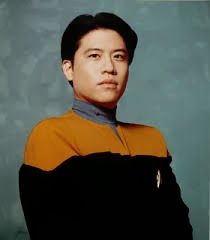
Not to specification: The crew of Star Trek: Voyager


So recently I have been re-watching Star Trek: Voyager.

There, I’ve said it. Let’s get past that. I needed something undemanding on the brain, OK? I didn’t set out to watch it – I was a victim of circumstance.

The trouble is I am a child of the Blockbuster Video age. I just can’t wrap my head around streaming. The infinite choice makes it impossible for me to take a chance on something (as I was forced to in the days of video rental) because the lure of some mysterious TV Eldorado urges me on, through a jungle of countless pages and options. The quest inevitably grows hopeless, whereupon I become disgusted with myself and fall back on old favourites from my teenage years:

Hence Voyager.

Watching it again I was struck by a couple of things: First was the memory of the shameful connotations the show has for me, more than any other scifi viewing. I think its because I got into it (aged 18ish) through my brother, who in turn discovered it through a chef at the hotel where we worked.

I seem to recall spending an evening with them both, "doing a Voyager-a-thon" in a disused hotel room the size of a broom cupboard. I remember eating crisps in shimmering blue TV light, choking on the scent of the chef’s sweat, listening to my viewing companions occasionally say something like: “Tuvak rocks”. I remember the chilling sense that I had fallen very far from the cool tree, and may never find a way back.

There's always an
exception to the rule
However, on this latest viewing what really hit me was the writing. I don’t mean the usual Star Trek complaints, like the way characters have to refer to space animals with irritating binomials: “You’re as stubborn as a Talaxian mule”, “as keen-eyed as a “Therbian Hawk”, "as greedy as a Bolian pig" etc. (to which I always wind up yelling at the telly: “Just say pig! I don't care where the pig's from!”)

I’m talking about the manner in which a tremendously promising ensemble of characters was almost immediately allowed to stagnate into a crew of un-relatable Mr Perfects.

Don’t get me wrong, there are some great stories in there, and one or two crew members - notably the Doctor, Seven and Tuvak - have their moments. But for the most part the Voyager writers have a perverse habit of refusing to write characters to their own specifications.

Here are just a few examples:

Torres:

Specification: A half-Klingon member of the Maquis, the resistance fighters who have been waging a desperate war on the edge of space. Generally regards Starfleet as appeaser of an evil, occupying alien force. Thrown to the far end of the galaxy by “The Caretaker” and forced to join up with Starfleet Vessel Voyager. Proud, violent, impulsive, furious.

Ooh, she is stroppy
Sounds promising right? After all, Kirk himself told cadet Savik that “the Klingons don’t take prisoners” - as many Maquis of WW2 refused to do. She should clearly then be someone who has summarily executed her fair share of foes, and therefore a destabilising element on Voyager.

Yet the writers give her nothing to do but propose fixes (“it might be enough”) to the endless stream of remarkably unthreatening threats which the ship encounters. Oh, she has the occasional tetchy moment, but the writers don’t go close to exploring how the rebel hell-bitch they specified would act if forced to accept Starfleet orders - espcially from a Captain like Jinxed Janeway.

If she led a mutiny, or harboured a homicidal grudge, then maybe I’d believe she was a member of a warrior race. I might also be interested in her. Instead she is pretty much indoctrinated into Starfleet living death by halfway through season 1.

Meanwhile those warrior genes are only explored through jaw-splittingly tedious “coming to terms with my heritage” episodes, spent buggering about on the holodeck reenacting hunting rituals - which all has the feel of a "one-eighth Hopi" New York stockbroker spending a weekend in a tepee.

Speaking of which...

Chakotay:

Specifications: Resigned from Starfleet on principle. Leader of a privateer-style Maquis group. Has spent years fighting a desperate war at the edge of reason. Presumably seen some serious sh*t and done some serious sh*t in order to survive/ fight his war. Domineering, ruthless, brave.

So why is he such a bloody bore? I have no trouble with him deciding to make the alliance with Voyager work, but he should maintain discipline among his people as a pirate captain would – tossing them in airlocks, slapping them about, employing a bit of a Kirk-style itchy trigger finger. He should be untidy and uncomfortable in that dumb uniform. Instead he is manicured and hair gelled, wearing that tattoo with all the authenticity of a Chinese character on the back of a student’s neck.

His personality is all wrong too. He should be gruff, instinctive, fatalistic. Instead he spends most of his time remembering everyone’s birthday and handing out pep talks. The writers also insist on exploring his bloody heritage again. Do we really want this guy to be moaning about how “I don’t understand the ancient language of my people?” Hell no. We want him slapping anyone who suggests he tries to grow. And as for dream quests, well…let’s not even go there.

It's a real shame, because if he did come across as more of a frontier gun-slinger it might, you know, make him likable. It might also create genuine sexual tension between him and Janeway, which would be interesting - and certainly more entertaining than the chaste tea-and-biscuits thing they have in the show.

Tom Paris

Specifications: Disgraced protégée from illustrious Starfleet family. Covered up his own mistakes in a crash that killed three colleagues – later, racked by guilt, he confessed. After being dumped by Starfleet he joined Maquis, but was captured on first mission. An opportunist convict who brings shame and disgrace wherever he goes. Cynical, reckless, gifted, insecure.

The writers obviously started out loving this guy. How do we know that? Because in the opening episode we have his fat back-story dropped in our laps. Compare him to Janeway, supposedly the lead character, of whom we learn nothing save that she’s a brassy lady with big hair. You’ll also notice that they cast a bloke with one of the sleaziest faces in TV history. You can tell the writers wanted to have fun with him.

Then, just as with the others, it’s all jettisoned like an overheating warp core. I can forgive Paris accepting his field commission on arrival in the Delta quadrant, because hey, he needs some time to
Deeply sleazy
figure his next move. But wouldn’t a guy like this plan to dump these losers the first opportunity he gets? Why doesn’t he pinch the Delta flyer and sneak off in the small hours, planning to camp on some secluded planet with nice beaches and gullible natives? Of course he would come back eventually - he could even rescue Voyager from some peril if they liked. But it would make him a little unpredictable.

But no. Nothing happens. From episode two his character is loyally entombed on the bridge, bleating “Yes maam” to every crazy Janeway order. Even during an episode like 30 days, during which he is demoted for disobeying orders, he does it all in the name of literally saving a world. He has no questionable intentions. Which makes him DULL.

Oh, the writers have the odd crack at livening him up. They give him gags - but they are rarely amusing, mostly lame references to Jeffries tubes and warp nacelles (rather than prejudice and wordplay). Eventually he's reduced to the Doctor’s straight man, which is almost sad.

In that respect, his romance with Torres makes sense. After all, if you refuse to let either personality play out, what’s left but sex? But even here the relationship is of zero interest. Paris should sleaze onto other women. That might engage one or two of those elusive female viewers (I’ve heard that some women, in rare cases, love a bastard?) and help make his character a little hot-blooded. Torres should slap him about in response. And shouldn’t they have amazing make-up sex?

No. Not a bit of it. It’s all being late for candle-lit dinners, because they're so darn dedicated they had to pull an extra shift. It's impossible to give a damn about them. Why? Because you don’t get chemistry between two inert substances.

After all that initial promise Paris is left a neutered pup, with nothing to fill his time but holodeck recreations of “20th century” science fiction - which look an awful lot more entertaining than his own adventures. And that can’t be right, can it?

Oh , I forgot. There is one more thing that defines Tom Paris. His friendship with…

Ensign Kim

Specifications: Er…he loves his folks?

OK, so this guy doesn’t really have specifications to live up to, but as the ultimate purveyor of the oblivious chirpiness that permeates the Voyager crew, Kim drives me nuts.

It wouldn’t be a problem if he was the only torch-bearer of that damned can-do optimism: that at least would have the potential to make him a funny foil for other character’s frustrations (“Kim, why don’t you take that picture of your folks and shove it right up your ****”). Instead the chirpiness infects everyone, giving the whole group the feel of the galaxy’s dullest cult.

I could only forgive a character as thin as Kim if one episode we saw him pick up a phaser and go on a glass-eyed rampage about those endless, identical corridors, executing everyone of his relentlessly up-beat ship-mates.

That I would believe.

I’ll have to leave it there for now. After all, what's worse: writing Voyager or complaining about it on your obscure blog? Suffice to say that I do still love the show, and I’m not blaming the writers entirely. They do seem shackled by the same Roddenberry-ordained moral code which prevents any post-TNG character becoming truly lovable. Besides, they do pull it out of the bag here and there - episodes like Equinox, Year of Hell and Scorpion have some great B-movie fun in them.

I just felt compelled to write because every time I revisit an episode I can’t help but think:

I wish this thing had more balls.


Tuesday, 27 August 2013

Blog featured on Gollancz!


Thrilled to say my recent blog on War of the Worlds featured on the Gollancz blog at the beginning of the month. Hopefully more to come soon, if I can just think of other cool stuff to write about...

Maybe a homage to an out of print master, like Mr Jack Womack? Suggestions on a stamped addressed telegram please.


British Fantasy Round Table


Here is the recent round table discussion I took part in to discuss the Salt British Fantasy 2013 collection. I acknowledge that I look like a miserable bugger in the still above, but actually I had a lot of fun.

It was brilliant to meet the blokes from SciFi London and especially EJ Swift (I'm reading her book Osiris now) and Lavie Tidhar (whose Central Station stories I know and admire from Interzone). They were a great deal more interesting than me and excellent to have a pint with after.

If you'd like to discover how little I know about British Fantasy, this is a great place to start.


Thursday, 11 July 2013

Interview with Ham and High

Really pleased to have been interviewed by my local paper for the Best British Fantasy  2013 collection. You can read it below or read it online here